

I’m at that age where the number one accessory in my friends’ purses is no longer the hottest new lipstick color. It’s a pair of readers.
The moment the small print comes out, the fishing for the glasses case commences. Just this past week, I peeped my friend’s phone and saw the enlarged font on her text messages. Because small print gets harder to read as we get older.
Yet, the minimalist vibe on business cards these days seems to think we all have the eyes of my teenage boys.
News flash: we don’t.
So, why is it that when I went through the stack of business cards I’ve accumulated over the past months at networking events, the majority had a font so small that even my boys would have to squint? My guess is because business cards are often an afterthought, and people forget that they may be your first marketing touch with a potential client.
To save your business card from the pile left unread, or, worse yet, in the recycle bin, here’s a list of some things you want to consider to make the best first impression:
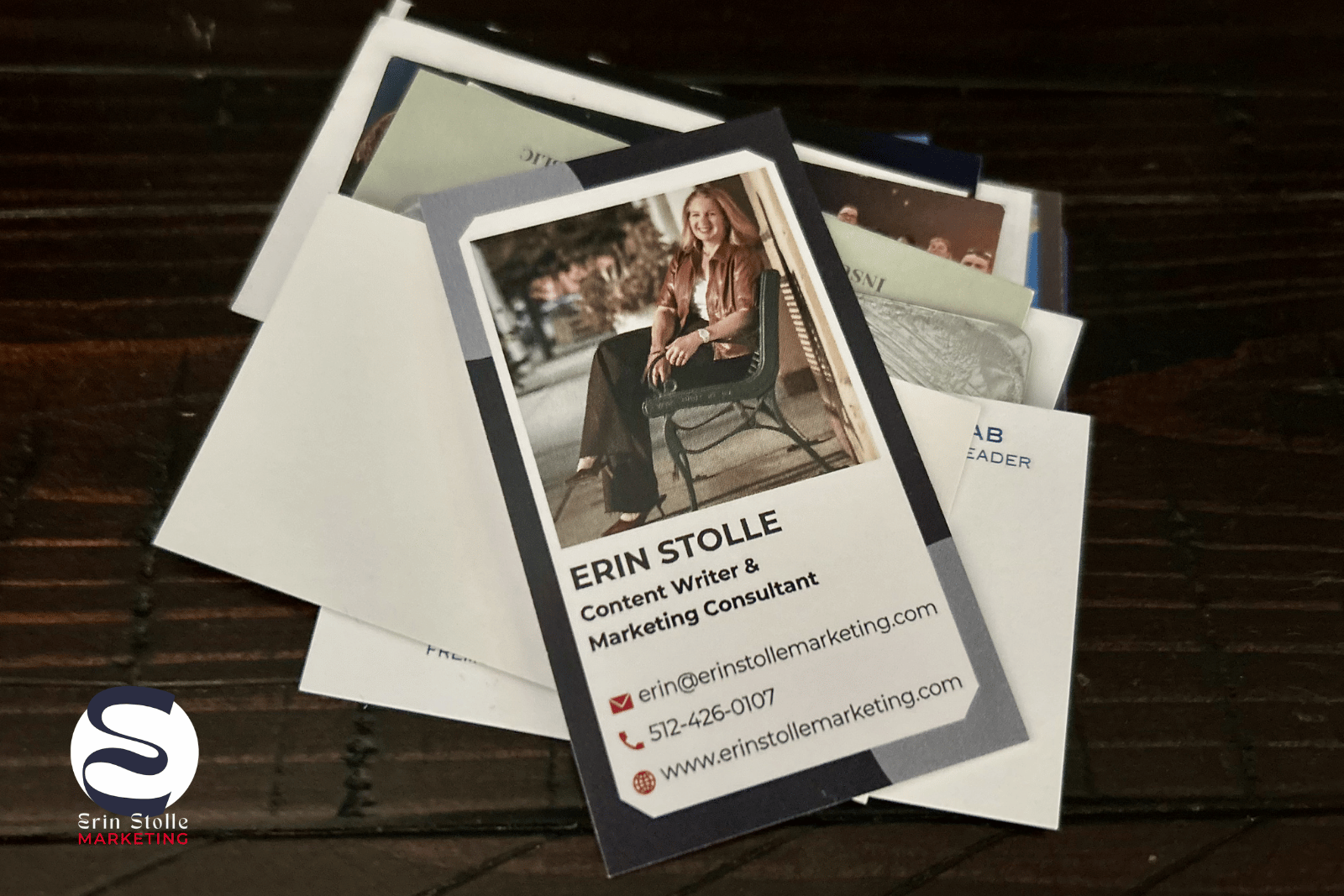
- Make sure your type size is at least 7-8 points—bigger, if possible. I get it, space is limited. But below 7, things get really hard to read. Don’t make your recipient reach for their readers.
- Pick a font that is clear, clean, and has some oomph to it. Too serif-y, letters start running together. Too thin, the letters start fading into the card’s background and you begin questioning whether that’s an “I” or an eyelash. I’m a big fan of a san-serif font, like Montserrat, which has different weights from which to choose, allowing you to vary your look slightly, while not competing with the look and feel.
- Add your brand colors. If your card contains any graphics, use your brand colors to make them pop. When someone sees the consistency in your marketing materials, it establishes you as a more thoughtful brand, which, in turn, could help them trust you more with their business.
- Include a photo of yourself. Humans are visual, so if you can find a way to tie a face with a name, you will start to form more of a connection. The next time they see you, well, the face recognition may be what helps them let their wall down.
For some of us, a business card is the first line of marketing. It can establish your brand and show a little personality, all while getting your contact information across. So, why not put a little more consideration into it and think about how your new contact will process what’s on the card?
Let your business card be the lead in to your story, not the conclusion.






Comments +